Thursday, 1 October 2015

CFA: ‘Werewolves: Studies in Transformations’


CFA: ‘Werewolves: Studies in Transformations’ (abstracts: 30th November 2015, full submissions: 31st March 2016)


Organization:
Dr Janine Hatter and Kaja Franck, ‘Revenant: Critical and Creative Studies of the Supernatural’

Contact email:
j.hatter@hull.ac.uk / k.a.franck@gmail.com

‘Revenant: Critical and Creative Studies of the Supernatural’ is a peer-reviewed, online journal looking at the supernatural, the uncanny and the weird. Revenant is now accepting articles, creative writing pieces and book, film, game, event or art reviews for a themed issue on werewolves (due Autumn 2016), guest edited by Dr Janine Hatter and Kaja Franck.

Werewolves have been a consistent, if side-lined, aspect of supernatural studies. From medieval and Early Modern poetry, through the eighteenth and nineteenth centuries’ fascination with the occult and the exotic, to contemporary depictions of werewolves in new media, these adaptable, mutable and ever resilient creatures have continuously transformed body and meaning to reflect social, cultural and scientific anxieties of their period. This special issue of Revenant seeks to examine werewolves from an all-inclusive interdisciplinary angle to allow for the fullest extent of these creatures’ impact on our cultural consciousness to be examined. Articles, creative pieces and reviews may examine any aspect of the representation of werewolves within the context of worldwide literature, drama, fan cultures, film, television, animation, games and role playing, art, music or material culture from any time period. We welcome any approach, but request that authors minimize jargon associated with any single-discipline studies.

Suggested topics include, but are not limited to:
technological metamorphoses, folklore & mythology, allegory, symbolism, aggression, humanity & bestiality, romance, monstrosity, hybridity, lycanthropy, transformation, nature versus nurture, the environment, natural/supernatural, the abject, hunger & desire, teeth & biting, infection & transmission, possession and/or mind control, split personality, disability, power, death & killing, burial rites, occult, religion, superstition, culture, philosophy, psychology, politics, gender, queer readings, sexuality, race and class.

For articles and creative pieces (such as poetry, short stories, flash fiction, videos, artwork and music): please send a 300-500 word abstract and a short biography by 30th November 2015. If your abstract is accepted, the full article (maximum 7000 words, including Harvard referencing) and the full creative piece (maximum 5000 words) will be due 31st March 2016.

Additionally, we are seeking reviews of books, films, games, events and art that engage with werewolves (800-1,000 words in length). Please send a short biography and full details of the book you would like to review as soon as possible.

Further information, including Submission Guidelines, is available at the journal site: www.revenantjournal.com.


Please e-mail submissions to j.hatter@hull.ac.uk and k.a.franck@gmail.com. If emailing the journal directly at revenant@falmouth.ac.uk please quote ‘werewolf issue’ in the subject box.


Monday, 21 September 2015

Religious Gothic: Gothic Reading Group schedule for Autumn, 2015

A new semester of Gothic is upon us! As the season of pumpkins and Halloween begins and we all come back from summer holidays, the University of Sheffield Gothic Reading Group has prepared a new year's worth of cake AND death! This semester's theme? Religious Gothic!

Note: All meetings will take place from 4-6 pm unless otherwise specified. Film screenings will take place in Seminar Room 4 (14) in Jessop West.  All other meetings will take place in Jessop West Meeting Room HUB 2.

On October 7th we will be screening the film "Black Narcissus," the 1947 psychological drama adapted from the Rumer Godden novel of the same name. Set in a missionary convent in the Himalayan Mountains, the film charts the fall of a group nuns and explores notions of sensuality, instability, jealousy and seclusion. So, all our favourite things to kick off the year!

We'll follow up on October 21st with selected passages from Matthew Lewis's "The Monk," perhaps one of the most infamous Gothic novel of all time. Whilst the novel is rife with topics for discussion, in keeping with our overarching theme for this semester, we’ll be discussing the way in which Lewis depicts Catholicism and his presentation of monasteries, convents and their inhabitants.

It’s a truth universally acknowledged that there’s nothing Sheffield Gothic loves more than Ann Radcliffe (except a cake with Ann Radcliffe’s face on it. We had one of those, it was glorious.) So, on November 4th we'll be reading a selection of passages from her 1797 novel "The Italian, or the Confessional of the Black Penitents." The session will discuss the novel in relation to Lewis’s
The Monk" and Radcliffe’s reaction to it, as well its religious themes and representations.

On the 10th of November we'll take a break from our semester theme for a joint session with The Sheffield Animals Research Colloquium (ShARCS).  We'll be reading up on a selection of texts on Gothic animals, with a special emphasis on sea-monsters.  Details to be announced, stay tuned for more information!

We're not suggesting you come to Gothic Reading Group dressed as a mad monk... OR ARE WE???

Our novel for this term- or at least the one that we’re reading in full- is James Hogg’s 1824 masterpiece (if we do say so ourselves) of Scottish Gothic, "The Private Memoirs and Confessions of a Justified Sinner." Quoting from that well known and reputable source Wikipedia, the novel ‘infers a pseudo-Christian world of angels, devils, and demonic possession.’ It’s been a favourite of ours for some time, and we’ll be delving into Calvinism and the Gothic double, among other topics.  We'll be discussing it (with cake) on November 18th.

What’s a term focused on Gothic and religion without a little cult action? We'll round of the term on December 2nd with a screening of the cult film (in every sense of the word) "The Wicker Man." Although we all have a fondness for Nicholas Cage in a bear suit screaming about bees, it will be the 1973 original film starring the late, great Christopher Lee.

We cordially invite you to join us for fun and frivolity, madness and mayhem, as we march forward to almost certain doom with another year of Gothic studies and Gothic joy.  Anyone interesting in writing a guest blog on any of the above texts or anything you love (or love to hate) about the Gothic, please contact us at gothicreadinggroup@gmail.com.  

And do stop by for GRG meeting... we'd love to have you...for dinner...!! Bwhahahahaha...(cough) sorry...

Sure, when Christopher Lee does it it's a classic movie moment... but when we kidnap strangers and perform ritual human sacrifice suddenly we're a "dangerous cult" and "ruining Christmas."
The Sheffield Gothic Reading Group is open to all.  Follow us on Twitter at @SheffieldGothic

Thursday, 10 September 2015

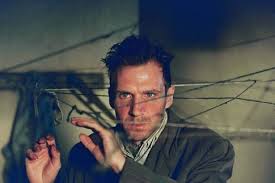
McGrath vs McGrath: Patrick Mcgrath’s "Spider" and the Ralph Fiennes film adaptation that is Totally Not Harry Potter


What do Voldemort, a sock down the trousers, and an intricate series of hooks and pulleys composed of pilfered sting have in common (other than this overwrought comparison)?
Patrick McGrath.

I recently finished re-reading McGrath’s 1990 novel Spider and it was, largely, an enjoyable experience. I say largely, because it has left my language severely disrupted and almost forced me to coin the idiom “pissing spiders”. But the novel itself was excellent, a claustrophobic account of Dennis Cleg (or the Spider of London, as he often wishes to be dubbed). Mid-way through my reading, however, I was made aware that there was Cronenberg adaptation of the novel, staring the dark lord Ralph Fiennes himself. And so it was that, late one fateful Tuesday night, I settled down to watch the adaptation and lost approximately 91 minutes and 17 seconds of my life. Allow me now, dear reader, to steal a few minutes of yours to help you avoid such a fate.

I think my loathing of the Hades remake (anyone else remember Fiennes in Clash/Wrath of the Titans? No?) stems somewhat from my love of the text. Spider involves one man’s recollections of his childhood and the horrors that occurred in his home. We are slowly enveloped in this somewhat eloquent, sometimes charming, but mostly unreliable narration as Dennis Cleg take us on a warped nostalgia trip through the events that drove him to the halfway house where he now resides under the watchful gaze of the tyrannical Mrs. Wilkinson.

Of course I don’t want to spoil some of the more shocking revelations, but ‘your Spider’, as he refers to himself on several occasions, spends the text darting between reality and memory, often depicting events that he was definitely not present to observe. The whole experience is one of unravelling: the reader unravelling the mystery of his predicament; Spider unravelling his story thread bit by bit; and Spider’s own gradual unravelling as the process of remembering slowly drives him back into a form of madness. The story revolves around patriarchal disharmony, an unreliable narrator’s framed narrative, and a perceived revenge tale, and feels distinctly Gothic in tone; it’s hard not to feel Poe in the margins, asking readers if they still think him mad, or to not think of Roderick Usher’s house crumbling into the tarn when Spider visits the blitz-ruined wreckage of his childhood home. It’s an enjoyable read, with subtle nuances towards the twists that keep driving the plot forward.

 
"I feel crazy... oh, so crazy!"

Meanwhile, in the Michael Ebbs version (The Chumscrubber, anyone? 2005? Fiennes plays a mayor? Terrible film, anyway), this subtlety and nuance is lost. Of course, it’s difficult to portray the dual narrative nature of the story (past and present, which McGrath blurs at several points) and the film does actually portray this well.  However, much is lost in the adaptation. The subtle psychosexual implications of Spider’s father killing his mother and replacing her with a prostitute is abandoned as 'Dolarhyde' (everybody loves Red Dragon) recollects his young self watching his mother dancing in a new shift for his father. The film even introduces another new scene in which a young Spider is flashed by Hilda Wilkinson, the aforementioned prostitute, in one of the early memory sequences, foregrounding an issue which is more gradually introduced throughout the novel.

It was also upsetting for a film directed by the Baron of Blood, the King of Venereal Horror, Captain Cronenberg (that’s my own) to not include some of the more interesting moments of grotesquery from the text. Scenes where Spider, for example, finds a baby and sucks its skull dry through a small hole in the top, or the strange sections detailing the warping and twisting of his organs, with his intestines wrapped up his spine, his colon and rectum twisting around his neck and anus showing from the back of his neck. And of course we mustn’t overlook the section in which Spider goes to the toilet and urinates out a thin black stream of spiders into the bowl. All these are abandoned and the film loses something in this. We are still treated to a scene where Hilda throws some of Spider’s Father’s semen into the river, though the camera is interestingly placed so that the audience has this thrown square into their face. Though the idea of this isn’t exactly pleasant, it is still only a mild moment of disgust compared to some of the passages dropped.

Behind the scenes with David Cronenberg

That isn’t to say the film is a complete disaster. The aforementioned section with Hilda and Spider’s father by the river does work incredibly well to show the blurring between Spider and his memories, and to establish the unreliability. Miranda Richardson’s performance in the film is, as always, wonderful, and adds depth to a theme that was purely implicit in the novels. Fiennes pulls off a sympathetic character in this version, but it seems a far cry from the Dennis of the novels. Instead of our confident, but breakable Spider of London, we get a mumbling broken Voldemort (the whole film feels like some strange Potter prequel, damn you Fiennes!), stumbling from a train onto the screen and muttering to himself as he pulls the long sock from between his thighs, an image which loses some of the nuanced sexual implications in the film.

Overall, I’d recommend McGrath’s novel for the immersive nature of the story, for the slow draw into dark implications and genuine concern for a character who charms us while he slips further into delirium, who hides in his own mind as he builds and propagates his own counterfactual narrative world. As Spider puts it himself, “Odd thing, no?”


Novelist Patrick McGrath


If you’d like to know more about pissing spiders, men encased in their own grotesque bodies or doctors trapped within memories then you’re in luck! Stirling University has heard your impassioned pleas to the Gothic Gods and is organising an entire day dedicated to McGrath:

ASYLUMS, PATHOLOGIES AND THE THEMES OF MADNESS: PATRICK MCGRATH AND HIS GOTHIC CONTEMPORARIES is a one day symposium on Saturday the 16th of January 2016, with a cfp out and abstracts due October 16th 2015. For more info, go to http://www.gothic.stir.ac.uk/blog/cfp-patrick-mcgrath-symposium-stirling-january-2016/ and follow the University of Stirling Gothic twitter account at @GothImagination


Danny Southward is a 3rd year PhD researcher at Sheffield University. When not displaying his surprisingly encyclopaedic knowledge of Ralph Fiennes films -[“Anyone else remember he was in the Hurt Locker, too? Madness. And the voice of the hunter dude in Curse of the Were-Rabbit!”]- he can be found pretending not to be thinking about Ralph Fiennes films.

Thursday, 3 September 2015

Reflections on a Craven classic: Last House on the Left


Trigger Warning: The film discussed in this blog contains scenes of graphic violence.

As many in the Gothic community know, horror director Wes Craven died a few days ago of brain cancer. A film legend, Craven established a number of iconic franchises and redefined not only the ‘slasher’ sub-genre but also the horror genre as a whole. This is not meant to be a tribute post – instead, I’m going to try to answer the question posited at the beginning of “Scream”: “what’s your favourite scary movie?”

Or, rather, I’m going to answer the amended version: “What scary movie written and/or directed by late master of horror Wes Craven do you think is particularly Gothic?”

“The Last House on the Left” (1972) was Wes Craven’s first mainstream horror film and one which is probably less familiar to a UK audience. This infamous ‘video nasty’ was refused a cinema release in the UK, and eventually a moral panic and the Video Recordings Act of 1984 lead to an almost 20 year ban of the film in England. Underground copies circulated but the ban was only officially lifted in 2002. To this day UK cinemas will not screen the uncut version.

The story itself is relatively straightforward as far as horror films go, especially compared to some of Craven’s later work (A burn victim who kills you in your dreams? Really?). It is ostensibly inspired by Ingmar Bergman’s 1960 film “The Virgin Spring”, itself lifted from a 13th century Swedish ballad. In "The Last House on the Left" flower-child teenager Mari Collingwood is about to turn 17 – she leaves for a concert with a friend while her doting parents prepare for her birthday party. She is a child becoming a woman, as well as a young adult half-stuck in the cultural disconnect between what her mother terms “the love generation” and the intense violence of a Vietnam-era world. Mari and her friend are kidnapped by a gang of criminals (self-appointed members of "the sex-crime business") and brutally raped and murdered in the woods. By a trick of fate the murderers later seek refuge at the home of Mari’s increasingly frantic parents who, on discovering their daughter’s death and their guests' guilt, enact a gruesome revenge.


Gang leader Krug (a precursor to Craven's Freddy Kruger) and friend in "The Last House on the Left" (1972)

“The Last House on the Left” is a film I always watch with relative optimism,  both because I’m fairly jaded and because I always forget how extreme it is. The rape and murder scenes are extensive and relentless, while many memorable elements that stick out are horrifically un-horrific: a pair of bumbling policemen experience various hi-jinks, scenes of sexual violence juxtapose shots of Mari’s parents laughing and making birthday cake, and the soundtrack echoes the cheerful and mellow folk tunes of the day.

I went to see a local theatrical screening recently - a late night viewing full of rowdy, laughing young adults. After a scant 80 minutes the end credits rolled and everyone in the almost packed theatre marched out in grim, horrified silence. For all of its dated effects and the cheesy 70s vibe the film remains potent enough to shatter anyone’s idea of a fun night at the movies. In a world where torture-porn has developed to outlandish heights, a simple tale of serial killers and revenge still hits us where we live.

This is perhaps because of the troubling catharsis the movie manages to achieve after such exhausting horrors, the kind of release which horror movies and revenge thrillers before and since have long attempted to exploit. The first two acts of the film are agony, a brutal litany of sexual violence and murder jarringly interrupted by grotesquely cheerful scenes of Mayberry-esque domesticity and hippie music. But when Mari’s parents finally realize that the murderers of their beloved child are in their power, all ambiguity disappears – they don’t hesitate.

A revenger's tragedy...

The “would you or wouldn’t you?” revenge question, the “doesn’t this make us no better than them?” problem of reciprocated violence appears with a vague moral gloss in most thrillers, or in horror films is often secondary to the character's desire to simply survive. But in “The Last House on the Left” there is something particularly raw and real about the monstrous yet vulnerable killers sleeping upstairs while Mari’s two middle-aged parents, passive and almost fragile in earlier scenes, rummage through their basement looking for the most intimidating weapons they can find, booby-trap and destroy their own house (a house still decorated for their daughter’s birthday), and go after the murderers with a weird mix of methodical determination and animal viciousness. “Just do it,” a gang member screams as Mari’s father hover’s menacingly over him with a chainsaw. The father doesn’t seem to hear. Mari's parents never question what they are doing or why. There’s nothing behind the Collingwoods’ eyes, not even fear or rage, now that their hope for the future is gone… and when they have exacted revenge they sit together in silence in the wreckage of their home, numbly unapologetic.


The film ends with the Collingwoods’ horrific satisfaction, the wretched relief of a job well-done, a sense of being unmade and remade into something horrible. If Freud’s ‘heimlich’ means a sense of homeliness and “belonging” to the home, than this final act tantalizingly twists concepts of the uncanny. This family’s home is no longer ‘home,’ but because of what was done to the Collingwoods and because of what they, in turn, did in response, Mari’s parents do now truly and inescapably belong in this bloody and shattered space. They are the true uncanny beings. The film is widely accepted as a commentary on the Vietnam War but remains relevant for new generations still preoccupied with violence. I won’t recommend “The Last House on the Left” casually (because, jeesh, you have to draw the line somewhere), but I offer it for consideration as an early reflection of a horror movie master’s preoccupation with monstrosity and identity, as well as a memorable stand-alone piece.

On horror movies: "It's like boot camp for the psyche. In real life, human beings are packaged in the flimsiest of packages, threatened by real and sometimes horrifying dangers, events like Columbine. But the narrative form puts these fears into a manageable series of events. It gives us a way of thinking rationally about our fears."  Wes Craven (1939-2015) directing "Scream 2" (courtesy of Dimension Films)


Kathleen Hudson is a PhD student at the University of Sheffield, studying servant narrative in early Gothic literature.  She's probably seen one too many movies...

Thursday, 20 August 2015

Innsmouth Gold


The first book of H. P. Lovecraft’s work I owned was The Lurking Fear and Other Stories. I had purchased it because my friend had told me “The Lurking Fear” was absolutely terrifying (he was right). But this slim volume also contained “The Shadow Over Innsmouth” and this story has become one of my favorites. With Lovecraft’s 125th birthday shambling towards  us today, August 20th (happy birthday, you Gothic weirdo), I asked myself why I liked this story so much. Of all of his stories, why does “Innsmouth” give me such a horrid thrill?

I suppose some of it is my personal background. I grew up in Detroit where Prohibition-era bootlegging is a part our communal folklore, and on the very first page the narrator reveals that the government’s story about federal agents battling bootleggers in Innsmouth was fabricated to hide a darker secret. Moreover, my childhood in Detroit afforded me the opportunity to experience the smell of dead, rotting fish washed up under a pier. While I don’t have the extreme dislike of the sea and its denizens that Lovecraft had, it is true that I rarely eat fish unless it comes deep fried and drowned in lemon juice.

Perhaps my childhood memories  of watching Hammer horror films with my older brothers and later reading Poe are also factors. For “Innsmouth" is one of Lovecraft’s most Gothic stories. Now if I was to say, “Lovecraft and Gothic,” the first story that would come to mind would probably be “The Rats in the Wall.” That “Innsmouth” does not come to mind first, makes it also, I would argue, one of his best.

But I’m getting ahead of myself. What makes “Innsmouth” so Gothic? The curious narrator visits  the town of Innsmouth and finds it in a state of moldering decay that is the equal to any ruin found in Radcliffe. The Innsmouth locals are standoffish until he comes across a superstitious and chatty servant – I mean the superstitious town drunk, Zadok Allen. Once plied with bootleg alcohol, Zadok reveals – in great detail – the cursed history of the town. It all began when the sea captain Obed March brought back a strange object – and stranger ideas – from a remote island in the South Pacific. Eventually, Captain March took a second wife. While she may not have been locked in an attic like the first Mrs. Rochester, Obed’s second wife was never seen outside of the house. I don’t want to give too much away in case anyone hasn’t read it, but the curse involves sex and immortality (but no vampires). Like many Gothic heroines before him, the narrator flees through Innsmouth’s dark, labyrinthine ruins and swoons when he cannot help but look at a horrid scene.

The above is by no means a comprehensive list, but it gives an idea of how steeped in Gothic tropes the story is. And yet, “Innsmouth” is much more than a collection of borrowed  effects. It is also a very modern story. Obed March did not make his Faustian deal with the devil. Rather, he made his deal with an alien species making the story just as much science fiction as Gothic horror.

As modern as it seems given the above, the story is almost a hundred yeas old. Has it aged well? The answer is another part of why I like it so much. Someone with modern sensibilities (and not just a fan of old-fashioned Gothic horror) can still be unnerved by it because the most chilling part of the tale is not the traffic with an alien species. Rather, it is that at any moment this species could take over the planet. Simply put “Innsmouth” creates a world in which humans are neither masters and possessors of nature, nor chosen and protected by a benevolent God. Humans are just one of many species and certainly not the most powerful.

Moreover, Lovecraft makes this powerlessness very personal. If there is a moral in Lewis’ The Monk, it might be that one should be moral, but also worldly enough to avoid the snares laid by the devil. The tragic fall of Ambrosio might have been avoided if he was a little less virtuous, if he had been raised in a more open, worldly home, instead of a monastery. However, the final fate of the narrator in “Innsmouth” could not have been avoided, which changes his dramatic escape from being heroic to tragic and ironic. That humans are doomed and there is no way to avoid it makes “Innsmouth" is a wonderful allegory of the twentieth century existential crisis.

It is a true testament to Lovecraft’s talent that he was able to so seamlessly blend an old genre with modern fears and anxieties.


T. G. Rivard is a guest blogger.  His love of the Gothic started with watching Hammer horror films which in turn lead to the stories of Edgar Allan Poe, H. P. Lovecraft, Walpole and Radcliffe. He writes Gothic and weird tales and posts them on his blog, A Weird Miscellany.

Wednesday, 12 August 2015

International Gothic Association: Conference Report, "Gothic Migrations 2015"


The 12th Biennial International Gothic Association Conference: Gothic Migrations took place in Vancouver, Canada, from July 28th to August 1st this year. John Whatley of Simon Fraser University was the Conference Organizer, with funding and support provided by SFU Faculty of Arts and Social Sciences, SFU Department of English, and SFU Centre for Online and Distance Education. The University of Sheffield was represented by Dr. Angela Wright (Co-President of the IGA) and Dr. Andy Smith, as well as PGR students Kathleen Hudson and Kate Gadsby-Mace.

The Conference started off with an introduction by IGA co-presidents Dr. Angela Wright (University of Sheffield) and Dr. Catherine Spooner (Lancaster University). David Punter then awarded the Alan Lloyd Smith prizes to Joseph Crawford for best monograph for his work The Twilight of the Gothic? Vampire Fiction and the Rise of the Paranormal Romance, 1991-2012 (University of Wales Press, 2014), and to Glennis Byron and Dale Townshend for editing the best collection of essays in their work The Gothic World (Routledge, 2013).

On Wednesday the conference started in earnest and delegates participated in a wide selection of panels. Panel topics ranged from Medical Migrations to Transgothic to Neoliberal and Consumerist Gothic, to Gothic media, to Vampires and the Posthuman, to Gothic food and sensory experience. Notably, many papers provided diverse representations of international Gothic studies, exploring Canadian, Latin America, Southern, and Asian Gothic (among others).

The conference had three plenary speakers. Dale Townshend presented first on “16 October 1834: Architecture, Romance, and the Migration of the Gothic Imagination,” a paper on Gothic architecture and the British national identity (specifically reflecting the design of the Houses of Parliament). The next day Julia Wright offered her take on Gothic homelessness in her paper “Spooky Houses and the Unheimlich State.” Justin Edwards provided the final plenary talk with his discussion of kitsch and zombies in discourses of terrorism in “Migrations of Terror; or, Zombification and Everyday Terror/ism.”

There were readings from two fiction writers: David Chariandy, reading from his novel Soucouyant (2007), a work examining post-colonialism and dementia, and Wayde Compton, reading from his collection of short stories entitled The Outer Harbour (2014).

The conference also provided several round table discussions, including one on Southern Gothic, moderated by Charles Crow, and one on Vancouver Gothic Film, moderated by William Dow.

The IGA offered its delegates a range of activities outside of the conference. On Wednesday evening many attended the ‘Festival of Lights,’ a fireworks show at one of Vancouver’s beautiful beaches. On Thursday delegates were treated to an evening of “Liminal Darkness: A Celebration of Canadian Gothic Film.” Hosted by The Cinametheque Theatre, actor William Dow and academics Julia Wright and Karen Budra introduced the event by playing clips from the TV shows X-Files and Supernatural, both filmed and produced in Vancouver, while discussing some of the Gothic elements and specifically Canadian influences. They then screened the Canadian film Ginger Snaps (2000), a darkly humorous horror movie directed by John Fawcett about the relationship between two troubled sisters after one of them is bitten by a werewolf. Dealing with Gothic themes of body abjection, gender, familial trauma, and uncanniness, and filmed in a highly self-referential style, this movie has a particularly Canadian feel, problematizing space, identity, and transitions.

On Friday afternoon members of the IGA attended the Annual General Meeting. At this meeting Angela Wright and Catherine Spooner were re-elected as co-presidents of the IGA, the budget and plans for publications were discussed, and the host institution and theme of the next conferences were announced.

After the meeting delegates attended the Conference Banquet by Sunset Harbour Cruise, a two hour cruise around Vancouver harbor complete with a wonderful meal.

The Conference wrapped up with a few more panels and the closing meeting on Saturday. IGA 2015: Gothic Migrations was a highly successful conference, and we would like to give special thanks to the organizers and participants who made the whole week not only possible but also enjoyable and enlightening.


Papers presented by delegates from the University of Sheffield
Angela Wright presented: “‘Moving Forests’: Gothic migrations in ‘Mont Blanc’ and “The Triumph of Life’ by P.B. Shelley”

Andrew Smith presented: “Anglo-American migrations: Saul Bellow and the Gothic”

Kate Gadsby-Mace presented: “The Gothic Nation: Landscape, architecture and the Wanderer in William Henry Ireland’s Gondez the Monk (1805)”

Kathleen Hudson presented: “‘I say it is mine’: Narrative migration and colonization in Charlotte Dacre’s Zofloya, or The Moor”


Report composed by Kathleen Hudson

Wednesday, 5 August 2015

CFP: The Summer of 1816 Conference


‘The year without a summer’, as 1816 was known, was the year in which Percy Bysshe Shelley, Mary Godwin (later Shelley), Lord Byron, John Polidori and Claire Claremont came together, for the first time, in Geneva. This meeting of five creative minds at Lake Geneva in 1816 has been the subject of several films and a recent documentary. To date, however, it has not been the subject of an academic conference.

To commemorate the 200th anniversary of this extraordinary summer, the University of Sheffield will celebrate this unique meeting between these Romantic authors. We invite proposals that will explore the literary, biographical, scientific and historical readings of the Villa Diodati group.

We will offer a pre-conference day long event for PhD students and Early Career Researchers. The Centre for Archival Practice will also host a masterclass that takes the delegates to visit the Sheffield Archives which contain a wealth of material. Each keynote speaker will offer a masterclass focused on their internationally renowned skills as editors and researchers.

We invite panel proposals and proposals for individual papers that will explore the literary, biographical, scientific, Gothic and historical readings of the Villa Diodati group, but we also encourage papers that focus on other authors working in 1816. We also welcome suggestions for panels for the conference. Please send 200-word proposals as an email attached document to the conference email address 1816conference@sheffield.ac.uk by 15th January 2016. Please ensure that your proposal is headed with your paper title, your name, institutional affiliation, and an e-mail contact address.

Visit our website, https://1816conference.wordpress.com/ for more information, updates on the conference, help with finding accommodation, and registration instructions.


Four of our research centres are involved and we are grateful for their support:

The Centre for the History of the Gothic (http://www.sheffieldhistoryofthegothic.group.shef.ac.uk/)

The Centre for Nineteenth Century Studies (https://www.sheffield.ac.uk/nineteenthcentury)

The Centre for Archival Practices (http://cap.group.shef.ac.uk)

The Centre for Poetry and Poetics (http://cppsheffield.tumblr.com/)