Wednesday, 24 February 2016

Matthew Bourne’s "Sleeping Beauty": A Gothic Romance


The lights go down, the curtain goes up, and the sound of rain and thunder fills the theatre. Onstage, a full moon is brilliantly illuminated in red, while in the shadows a dark, winged figure triumphantly holds up a baby amidst the cracking of the thunder. 


And then the scene quickly changes, the music of Tchaikovsky starts, and a simple yet iconic phrase is projected onto the stage curtains: Once Upon A Time . . . 


Trailer for Bourne’s New Adventure production of "Sleeping Beauty"


This is the story of Sleeping Beauty reimagined by Matthew Bourne, keeping the timeless music of Tchaikovsky but incorporating, through the narrative and choreography, what Bourne’s New Adventure production has titled ‘A Gothic Romance.’ I am by no means an expert in ballet or classical music, but what interested me in this production was its claim to the title ‘Gothic Romance,’ and therefore its conscious effort to situate itself within the Gothic tradition. My obsession with all things Gothic is in fact what prompted my mum to buy tickets to this production, and it is definitely a show worth seeing.

So, does Bourne’s "Sleeping Beauty" live up to its Gothic claim? As you may already be aware, Bourne is celebrated for his modern re-imaginings of classic ballets. In keeping with this principle, and completing his productions of Tchaikovsky’s trilogy of Ballets (which also include The Nutcracker and Swan Lake), Bourne’s version of the well-known fairy tale Sleeping Beauty is suitably re-imagined with Gothic, and even vampiric, elements. Discussing his inspiration for this production in the show’s program, Bourne cites the versions of the fairy tale by Perrault, the Brothers Grim, and also Disney, but further mentions ‘erotic novels by Anne Rice’ and ‘dark stories by Angela Carter.’ It is clear that these varied sources are reflected in the production; from the traditional ‘Once upon a time’ beginning, to the inclusion of vampires.

Carabosse and her two attendants. Photo by Johan Persson ©
Yes - vampires.

Or, perhaps more accurately, fairy-vampires? Complete with wings, fangs, and beautifully choreographed dancing, this vampiric addition to a classic ballet and traditional fairy tale does not detract from the story, but rather the vampiric element is woven seamlessly into the narrative. A narrative in which the heroine Aurora closes her eyes in her Edwardian home, and opens her eyes a hundred years later in our modern day. She is woken by a kiss from her childhood sweetheart who, unlike his heroine, has not exactly been sleeping for the past hundred years.

Yet even without the inclusion of this vampiric element, Bourne’s production of "Sleeping Beauty" is enchantingly Gothic. At Sheffield Gothic, we frequently discuss the Gothic nature of fairy tales (yes – even Disney versions, cue chants of ‘everything is Gothic’), and Angela Carter’s Bloody Chamber is perhaps the best example of this. Carter’s stories do not reimagine traditional fairy stories such as Blue Beard (‘The Bloody Chamber’), Snow White (‘The Snow Child’), and even Sleeping Beauty (The Lady of the House of Love’), but rather her collection brings to the surface that which is latent within them; revealing themes, content, and an aesthetic that is very much Gothic. This is very much the case for Bourne’s "Sleeping Beauty", with its introduction of the dark origins of the heroine Aurora, the curse of the malevolent Carabosse, and the vampiric land of the fairies.

Program for Matthew Bourne's "Sleeping Beauty"


The character of Carabosse further stands out as an apt Gothic villain, and the theme of doubles is raised through the characters of this dark fairy and her son, Caradoc. Further enhancing both the familial resemblance and also the theme of doubles in the production, these characters are fittingly played by the same dancer. Introduced fleetingly in the shadowy opening sequence, it is in the bedroom of the baby Aurora (who is portrayed by a rather creepy doll) that Carabosse is properly, and very dramatically, introduced to the audience; dressed opulently in red, she arrives on a train of smoke, led by her two attendants, and silhouetted against the full moon. In this scene, Carabosse displays her malevolent intentions for Aurora, and at one point uses a faceless apparition to uncannily act out the heroine’s fated death. Following the intervention of the vampiric fairies, led by Count Lilac, and as the fairy tale narrative naturally requires, the intended death of Aurora is transformed into a long and supernatural sleep. Thus it falls to her son Caradoc, a character created by Bourne to continue these malevolent themes throughout his production, to carry out his mother’s vengeful plans; the plot of revenge therefore takes on a suitably Gothic, familial characteristic.

Bourne’s production is an enchantingly beautiful and Gothic version of the Sleeping Beauty fairy story. Reimagining Tchaikovsky’s classical ballet with a Gothic and vampiric twist, he reveals the Gothic aspects inherent in the fairy story. In keeping with the ‘Once upon a time’ aesthetic and conventional happy ending, but also including a few vampires along the way, this production of "Sleeping Beauty" is definitely a show worth seeing for any fan of the Gothic.


Mary Going is a postgraduate researcher at the University of Sheffield.  She is our very own vampire fairy, spreading Gothic joy wherever she goes...

Tuesday, 23 February 2016

Reimagining the Gothic: 2016 Symposium and Showcase (registration and Information)


The Reimagining the Gothic Project, with the generous support of the International Gothic Association and the University of Sheffield Arts and Humanities PGR Forum, is pleased to announce that is has selected and confirmed it's speakers for the Reimagining the Gothic symposium event, taking place May 6th, 2016.!

We received so many wonderful and interesting abstracts and would like to thank everyone who contributed! While we could not accept everyone’s abstracts due to the high volume of submissions and the event’s time constraints, we were hugely impressed by the range and quality of the submissions. We would like to take the opportunity to invite everyone, whether your abstract was accepted or not, to attend either / both the symposium and showcase, and to contact us if you would like to be involved in the organization and promotion of the event.

Those interested in attending the symposium should fill out a registration form, downloadable as a PDF file here: REGISTRATION FORM

There are a limited number of seats available for the symposium so the numbers will be capped and attendance will be moderated on a first come, first serve basis. Please do not delay! Email your completed registration form to reimagininggoth15@gmail.com today!


-----------------------------------


We are also pleased to announce that the official 'Reimagining the Gothic' website has now gone live! This site promotes past Reimagining the Gothic projects and offers participants to share and engage with interdisciplinary and creative Gothic studies online.  


 -----------------------------------


We are also pleased to announce that this years ‘Reimagining the Gothic’ event will conclude with a wine reception and a public lecture given by Dr Xavier Aldana Reyes, a Senior Lecturer in English Literature and Film at Manchester Metropolitan University and a member of the Manchester Centre for Gothic Studies. His books on Gothic and Horror film and fiction include Body Gothic: Corporeal Transgression in Contemporary Literature and Horror Film (UWP, 2014), Digital Horror: Haunted Technologies, Network Panic and the Found Footage Phenomenon (co-edited with Linnie Blake; I.B. Tauris, 2015), Horror Film and Affect: Towards a Corporeal Model of Viewership (Routledge, 2016) and Horror: A Literary History (editor; British Library, 2016). Xavier is also the editor of UWP’s Horror Studies book series.  


Dr. Reyes' paper is entitled: Rethinking the Monstrous-Feminine: The (Un)Gendered Body of Abjection. 

ABSTRACT: Rethinking the Monstrous-Feminine: The (Un)Gendered Body of Abjection
This talk takes issue with gendered approaches to abjection that have put the body of ‘woman’, especially that of the mother, at the heart of the moment of monstrous repulsion. Focusing on the work of Barbara Creed, who borrows from Kristeva, I make a distinction between representational monstrosity and its cinematographic presentation. Arguing for the need to separate thematic concerns (the teenage female body in Ginger Snaps) from affective and emotional dispositional states (the way the werewolf body actually scares), I also argue for the potential dangers of their conflation. Like well-known ‘repressive’ approaches to sexual identity (vampirism as metaphor for homosexual desire, for example), these models run the risk of misreading (un)gendered monstrosity as the perpetuation of repulsive models of femininity and female corporeality.

In order to make room for a destigmatising rethinking of the monstrous-feminine, then, I propose that we also rethink our position as regards abjection. Reading it less as an effect of deep psychology and more as a body-based form of fearful disgust, I argue that abjection is more readily connected to our corporeal vulnerability. Monstrous abjection indicates less the abstract contamination or cross-pollination of boundaries than it does the brutal reality of a direct object of threat.

*This talk is a public lecture and therefore open to all. Venue details will be posted along with the Symposium and Showcase Schedule at a later date.*


‘Monsters and Monstrosities’: The FAQ


What is Reimagining the Gothic?


Reimagining the Gothic is project created and hosted by Sheffield Gothic, a postgraduate collective at the University of Sheffield. Now in its second year, Reimagining the Gothic is an ongoing project that aims to take the Gothic outside of its academic ‘comfort zone’ and encourage new thoughts, theories and engagement through creative and interdisciplinary methods.


When will it take place?

The academic symposium will take place on Friday the 6th of May and the creative showcase on Saturday the 7th of May.


Where will it take place?

The University of Sheffield. The symposium will take place in the Portobello Centre, and the showcase in the Humanities Research Institute.


Academic Symposium, Friday May 6th 9am-6pm

We've had a number of excellent submissions for our symposium, which has been extended this year to a full day event. There is no cost to register, and we welcome academics of all levels to attend. If you'd like to join us, fill in our registration form and return it to: reimagininggoth15@gmail.com before Wednesday May 4th.


Creative Showcase, Saturday May 7th 10am-6.30pm

Our creative showcase is open to academics, members of the public: to any and all who are interested or intrigued! The event will run all day, exhibiting creative projects - photography, SFX, creative writing- dedicated to exploring notions of monsters, monstrousness and monstrosity.


Lil' Monsters, full of children's activities (and prizes to be won!) will take place from 10am till 12noon. A series of short talks, drama, interactive, and visual projects taking place throughout the afternoon alongside out static displays. Visitors are welcome to come along at any time - please see our schedule for more information.


Who can attend?

The academic symposium is open to academics of all levels of study, from undergraduate to post doctorate. If you would like to attend, please and download a registration form (above) and email it to reimagininggoth15@gmail.com.

Our creative showcase is open to any and all who are interested or intrigued! The event will run all day, exhibiting creative projects dedicated to exploring notions of monsters, monstrousness and monstrosity. In addition, we will be hosting a charity nail bar, children’s activities in the morning and a series of short talks, interactive and visual projects taking place during the afternoon. Sheffield Gothic is excited to announce that day will be closed with a keynote speech from Dr Xavier Aldana Reyes, followed by a wine reception. Keep an eye on our blog and twitter (@SheffieldGothic and @TheReimagining) for updates.


Is there a cost?

No! Both the academic symposium and the creative showcase are free of charge.


'Reimagining the Gothic' was made possible through the generous support of the following groups and institutions:


Monday, 22 February 2016

Forshadowings: Performance Gothic in 'Over the Garden Wall' (Featuring 'Penny Dreadful' and 'American Horror Story')


In our next session, Sheffield Gothic is continuing with this semester’s theme of ‘performance Gothic’. This week, we turn to the silver screen: Penny Dreadful, American Horror Story and Over the Garden Wall. Frequent visitors to this blog will perhaps recall that I’ve gushed about Over the Garden Wall, Patrick McHale’s 10 part 2014 animation about two brothers searching for a way home, here before. Last time, I refrained from discussing the show in depth so as not to give too much away. But this would be a relatively pointless post if I did that again so consider this your spoiler warning.


Like Penny Dreadful and American Horror Story, Over the Garden Wall is firmly rooted in Gothic tropes and conventions. As I discussed previously, though its premise is hardly original in itself, OTGW treads familiar ground with new and very different feet. Visually and thematically it exists within the tradition of American Gothic, of Edgar Allan Poe and of New England Gothic. Over the Garden Wall uses these familiar Gothic elements to encourage certain expectations in us as readers (or in this case, as viewers). We see the forest, with its autumn leaves and its roads that lead to many strange places but never to home, and we begin to anticipate certain things. In the second episode, Hard Times at the Huskin’ Bee, our protagonists, Wirt and Greg, stumble upon a remote village enjoying their harvest festival dressed in odd costumes (it’s pumpkins, they’re wearing pumpkins). The show plays on our expectations, encouraging our suspicions and leading us down the well-trodden path only to lead us astray at the last moment. Our pumpkin headed villagers mean the brothers no ill will: the holes they’ve had Greg and Wirt dig are not in fact their own graves, but the existing graves of awaited villagers. Who are skeletons. They’re all skeletons.

What a wonderful harvest...

Our prior experiences of the Gothic have trained us to be weary of certain signifiers and Over the Garden Wall plays with this. The fifth episode, Mad Love, draws heavily on elements of both classic eighteenth century texts and the work of Edgar Allan Poe. Wirt and Greg, accompanied by girl-turned-bluebird Beatrice and Fred the talking horse who wants to steal, travel to the mansion of Quincy Endicott to acquire money for a ferry crossing. Endicott, alone in his sprawling mansion decorated with Georgian sensibilities, is in love with a portrait. Or, the ghost of the woman he has seen in a portrait. A gentleman of questionable sanity, alone in house steeped in antiquity in love with a portrait- stop me if you’ve heard this one before. But what we expect never occurs. As it happens, the woman in the portrait is in fact Endicott’s neighbour and business rival. Their mansions are simply so large, they’ve joined together without them realising. They merge their businesses and live happily ever after. No horror, no terror, no tragedy, no fall.


Of course, as experienced consumers of the Gothic we are also trained to be doubtful of the signs and signifier’s texts offer us. But regardless of whether or not we spot the twists or notice the false leads, Over the Garden Wall leads us (literally) into the unknown. In the first episode, the Woodsman warns the brothers to beware the Beast that stalks the Unknown for lost souls. Wirt dismisses the warning and the shows distracts the viewers as it follows the boys through their series of misadventures. Whilst there’s much to say of the Beast itself and the shows conclusion, that I will continue to refrain from discussing. Amongst the pumpkin clad skeletons, singing frogs and demon possessed girls OTGW distracts us from the real danger to be found in the Unknown. It creates a world that exists within the sphere of familiar, well-worn Gothic tropes and conventions yet manages to create something original from within it. 

Typical reactions during a reading group meeting...

Over the Garden Wall is many things, but perhaps one thing that it is not is tired or clichéd. Often when conventions are recycled or reimagined, the resulting product is predictable and unimaginative. OTGW proves that it’s possible to avoid that. Of course a cast of excellent voice actors, catchy musical numbers, and memorable one liners don’t hurt. 


Lauren Nixon is a postgraduate researcher at the University of Sheffield. She likes potatoes and molasses... if you want some, oh, just ask us!

Monday, 15 February 2016

We need Eyre! Sheffield Gothic watches Cary Fukunaga’s 'Jane Eyre' (2011)


On Wednesday, Sheffield Gothic assembled to watch Cary Fukunaga’s Jane Eyre (2011): an elegant, superbly cast adaptation of Charlotte Brontë’s classic novel. Of course, I’m incredibly biased. I adore the Brontës and believe that Jane Eyre is one of the most (if not the most) radical female characters of the Nineteenth Century, so of course I was going to enjoy it, even more so the second, third and fourth times. But what makes Fukunaga’s version different from any other adaptation? How does it stand out? And, crucially, is it Gothic?


Although Jane Eyre is not necessarily a conventional Gothic novel in the same vein as Otranto and its contemporaries, it does perform a number of Gothic motifs, from the spectre of Mr Reed in the Red Room to Rochester’s buried secret: his ‘demonic’ first wife. Fukunaga’s adaptation, therefore, is doubly performative in that it performs Jane Eyre which, in turn, performs the Gothic.

On re-watching the film, I was struck by how well it engaged with Brontë’s language of spirits: Rochester repeatedly compares Jane’s spirit to that of a restless, caged bird, accuses her of ‘bewitchment’ and relegates her to an ‘invisible world […] a kingdom of spirits’. Fukunaga preserves this strain throughout, reminding the audience that Jane Eyre is largely a story about concealment. It is what we don’t see and what we don’t know that is frightening.  References to the spirit world and the soul are ubiquitous in both texts, arguably making Jane Eyre a ghost story without a (visible) ghost. The film, perhaps more so than the novel, omits superstitious possibilities (the ‘ghost of Mr Reed’, for example, is a mere cloud of black smoke from the fireplace) and yet, it is still a tale of haunting in the form of personal turmoil.  

Admittedly, Fukunaga’s version does shy away from some of the darker passages of Brontë’s novel in favour of the crowd-pleasing, romantic predictability we’ve come to expect from popular period dramas today. When the DVD came out in 2011, it was marketed as a Mother’s Day gift idea, complete with a free National Trust membership offer. Incidentally, a NT membership won’t get you into the privately-owned Haddon Hall (Bakewell, Derbyshire) where parts of Jane Eyre were filmed.


Haddon Hall was allegedly one of the models for Thornfield Hall. Another possible source of inspiration is the much smaller North Lees Hall in Hathersage. Luckily for Sheffield locals, it’s right on our doorstep, meaning that Michael Fassbender was a mere 20 minute bus ride away from Sheffield at some point in 2011. Just let that sink in for a moment.

"Hey girl, you transfix me quite..."

Filming at Haddon lends Fukunaga’s retelling an added dimension of authenticity, as it directly engages with Charlotte Brontë’s imagination during the composition of Jane Eyre and highlights the importance of place/landscape in her novel. You can read more about the connection between Brontë and the Peak District in Claire Harman’s recent biography, or if you’re inclined to outdoors-y adventuring, you can physically trace Brontë’s steps on the ‘Jane Eyre Hathersage Trail’ here: 

Overall, Fukunaga’s Jane Eyre is a faithful adaptation that doesn’t take any risks. For me, this isn’t necessarily a bad thing. Just look at Andrea Arnold’s Wuthering Heights (2011) for an example of why it’s sometimes better to stick closely to the source material. You know what they say: if it ain’t broke…

With that in mind, I’d be interested to know if anyone thinks it could’ve been more ‘gothicised’. Should future adaptations of Jane Eyre explore the Gothic elements of the novel in more detail? Tweet us at @SheffieldGothic with your views!


Carly Stevenson is a postgraduate researcher at the University of Sheffield. She's on Team Edward (Rochester).

Saturday, 13 February 2016

Gothic Reading Group schedule


All Gothic Reading Group meetings will take place from 4-6 pm every other Wednesday during term time, Location TBA
All within the academic community are welcome to attend! 

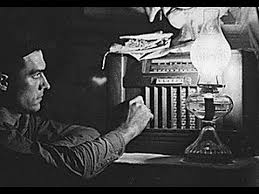
January 27th - "War of the Worlds" 
(1938 Orson Welles radio play)
A classic moment in performance Gothic, Orson Welles' adaptation of the H.G, Wells' 1898 novel allegedly created widespread panic when it was aired and remains one of the greatest pieces of radio horror of all time. The novel and adaptation tell the story of an alien invasion, and Welles' made of point of including realistic news bulletins to add authenticity.


February 10th - Jane Eyre
(2011 Cary Fukunaga film)
A widely celebrated adaptation of Charlotte Bronte's Gothic novel, this film stars Mia Wasikowska as Jane Eyre and Michael Fassbender as Mr. Rochester.  Beautifully shot, the film includes a virtuous heroine, a Byronic anti-hero, haunted spaces, and a madwoman in the attic


February 24th - Tropes in Television: Penny DreadfulOver the Garden Wall, American Horror Story
Over the last few years television has opened new doors for 'performance' Gothic - we will discuss the popular contemporary Gothic shows Penny Dreadful, Over the Garden Wall, and American Horror Story, and invite participants to bring their own examples to the meeting.


March 9th - The Fifty Year Sword
By Mark Z. Danielewski
Our novel for the semester pushes the boundaries of 'performance' Gothic, employing unusual formatting and colors in order to create a truly meta-fictional text. Danielewski is perhaps most famous for his epic House of Leaves, and this work follows up on that style by facilitating an interactive reading experience which compromises one's understanding of narrative and storytelling.


April 13th - The Revengers Tragedy
By Thomas Middleton
"This very skull, / Whose mistress the Duke poisoned with this drug, / The mortal cure of the earth, shall be revenged / In the like strain, and kiss his lips to death." A proto-Gothic play, this Jacobian tragedy develops some of the most pervasive horror and Gothic tropes and redefines notions of performance, Gothic objects, and identity.  Think of it as Hamlet on acid.


April 27th British Horror Radio
We'll be looking at a selection of the best in audio British horror, more details TBA.


May 11th - Reimagining the Gothic: Drinks and Debrief
Following our interdisciplinary and creative event 'Reimagining the Gothic: Monsters and Monstrosities,' Sheffield Gothic will hold an informal 'debriefing' meeting for all those interested in discussing the last year's work and planning for future events.


May 25th BYOG- Bring your own Gothic
We want to hear from you! Bring your favorite example of performance Gothic for group discussion.


June 8thGaslight
(George Cukor's 1944 film)
Do you know what's real and what's not? We'll conclude our year by screening a classic Gothic film, adapted from a popular play. Ingrid Bergman's stunning Gaslight also start Charles Boyer and Joseph Cotton, and coined the popular term 'gaslighting' as a terrifying, and particularly Gothic, form of mental abuse.

Wednesday, 23 December 2015

We Wish You a Scary Christmas

If we were to read aloud some of the lyrics of “Santa Claus is Coming to Town” slowly, and without the feel-good music and images of food and gifts, the words quickly become ambiguous. Why must we watch out? Why mustn’t we cry? Unless, of course, Santa Claus is not all that he seems. If Santa Claus has a dark side, then it becomes rather concerning that a strange old man sees us when we’re sleeping and knows when we’re awake. 

Santa's dark shade?
(That little girl doesn't care, as long as she has her apples)
The trailer for the new release Krampus (dir. Michael Dougherty) plays on the ambiguity of these words and links them to a version of the story behind the Germanic celebration of Saint Nicholas’s Day on December 6th. Having left out their boots the night before, good children awake to find that their boots have been filled with small gifts by the Saint; bad children are instead dealt with by his demonic, goat-like counterpart Krampus. This could involve being thrown into a bag and beaten with a birch rod or even being taken back to Hell. This part of the story is still celebrated in Alpine Germany, Austria, and some of the adjoining regions by young men running around their towns in costumes and masks (and with no small amount of Glühwein in their stomachs).


The Finnish genre-bender Rare Exports: A Christmas Tale (2010, dir. Jalmari Helander) has the same words and black humour at the centre of its English-language trailer. Rare Exports is more of a thriller than a horror comedy, but the tongue-in-cheek feel is still there: it is a story of a group of Sami reindeer herders responding to hard financial times and attacks by Santa’s Little Helpers (who turn out to be dirty, beared men who inexplicably shed their red suits part-way through the film) by capturing a Little Helper and attempting to sell him to a visiting researcher.


Putting aside the black humour and the mythological reinterpretation, along with the troubling suggestion that the rosy-cheeked gentleman from the North Pole only wears a big hat to hide his horns, both films turn on the hinge of their domestic drama. The family members in Krampus are at each other’s’ throats  long before “the shadow of Saint Nicholas” gets a chance, and Rauno and Pietari are struggling through the aftermath of the loss of a wife and mother along with their monetary issues. It seems a straightforward mythic reading to say that the monsters are present in these films so that the respective communities must unite in opposition to them; it’s equally fair to say that monsters can be simply used “to keep kids in order and in their place”, as Christoph Waltz did with a smile when he explained the Krampus story to Jimmy Fallon.


A Christmas monster both evidences the duality at the centre of many myths and festivals and allows us to skip over some of the more uncomfortable ambiguities in our celebration of Christmas. Once we start to wonder why Santa Claus watches us sleep or how he has access to our houses, the house of symbolic cards swiftly falls. We then have to wonder why parents who spend the year warning their children of the dangers of strangers (especially those who offer candy or wish to touch them) suddenly flock to local shopping centres to place their kids on the knees of costumed men, as if summoned by “Jingle Bells” coming on the air. No, it’s better to fear a goat-man: that way we don’t have to wonder why Santa Claus always seems to show up with gifts and candy-canes once the parents are asleep, let along probe any double-entendre of him coming down the chimney.

Luckily, the Santa Claus who makes the problematic overtones of his role visible with this
chimney joke gets taken off the streets by Rutger Hauer’s vigilante here immediately after telling it.
Despite Christmas being the most magical time of the year, it’s also the most stressful for many. The celebration brings families together but can bring a lot tension along with it. And it certainly stretches a lot of budgets. For these reasons and others, it’s a season with a high suicide rate – another shadowy flipside to the Season to Be Jolly. When it is looked at in this light, it’s certainly understandable that Christmas monsters still have their place in the modern celebrations of the festival. Perhaps spooking each other into familial or communal togetherness with ghost stories or Krampus costumes can be a cheap and enjoyable addition to the standard cultural fare of Christmas crackers, late-night gift shopping and off-colour jokes involving mistletoe. If the goal of most monster stories is to bring the community together around the fire, away from the things that go bump in the night, they can certainly do this job at Christmastime too.  And most of all: be good to each other (for goodness’ sake). 


Jason Archbold (our wonderful guest blogger) is a Cotutelle PhD candidate at Macquarie University and the International Graduate Centre for the Study of Culture at Justus-Liebig-Universität. His dissertation explores morals and ethics in apocalyptic fictions. When he is not dodging zombies as part of his research, he can be found investigating cultures through cooking or buried in a mass of comic books.

Monday, 21 December 2015

The Burton Conspiracy (Part Three): A Christmas ... Miracle?

As the season-to-be-jolly nears its climax, Danny Southward tries his hardest to keep us all in a suitably Gothic mood. Here, finally, is the thrilling conclusion to the three-part Christmas series on The Burton Conspiracy.

The Burton Conspiracy:
Part Three- A Christmas ... Miracle?

Welcome to the grand finale of my warped over-analysis of the Burton Theory, an attempt to tie three major animated films of Tim Burton's opus (Frankenweenie, Corpse Bride, & The Nightmare Before Christmas) together into one unifying theory. If you missed Part One and Part Two, then just follow those links for a slice of madness in which we establish our tragic hero, Victor, as he is seduced by a delusion which promises placation, companionship and a fulfilment of his desires. This time we reach the thrilling finale, and finally feast our minds on the actual Christmas themed film: The Nightmare Before Christmas.


That boy has legs for days. 
Having made the decision to abandon reality and adopt the delusion in our previous film, Corpse Bride, we finally find a Victor entirely engrossed in his Gothic Horror delusion. Our tragic hero has given into the allure of the dark thoughts that clouded his mind and adopted a persona that is the very representation of his own dark imagination: Jack Skellington, the Pumpkin King. How are Jack and Victor the same?

Other than their stylistically similar physiques, [and penchant for pinstripe trousers] Victor's scientific vigour continues through each character. From his interest in resurrection and science in Frankenweenie, through his scientific examination of the butterfly in Corpse Bride, and finally seen in Jacks insistence that there is a scientific method for identifying the essence of Christmas. His dog has also followed him through this transformation. His corporeal essence being returned by sparks when he is Sparky, before he degrades to Scraps and bones, and now finally as Zero, in which there is nothing left of his physical body, no sparks to sustain it, no scraps left, nothing, only the soul, Zero.

Victor, finally fully submitting to his delusion, becomes trapped in a world in which he is King, in which he is adored and loved for the strange quirks that branded him as strange and a loner as a child. He is idolised, he is adored and respected by the denizens of New Holland, which has followed his transformation through the ages too, now becoming Halloween Town, literally a nightmarish world populated by sycophantic horror stereotypes. Nightmare deals with Jack-née-Victor attempting, however, to escape this reality as he seems to realise that the horror cannot define him so thoroughly. Jack seems eager to escape the monotony, yet the real escape he seeks is from the delusion and his own mind trapping him in a reality filled with creatures eager to worship at his feet.

Jack, adored by all of the warped denizens including:
Vampires, A Doppelganger (the mayor), a Mummy (child), Witches etc.
And so the narrative details Jacks attempts to flee, to transpose familial happiness (epitomised by Christmas) upon his world- as he states of Christmas Town The monsters are all missing and the nightmares cant be found/ And in their place there seems to be good feeling all around []/ Ive never felt so good before. [This entire sections seems infinitely more tragic if considered as a man trapped inside his hellish delusion suddenly glimpsing into other peoples houses and discovering happiness there, that there is a world outside of his own darkness] Nobody here is dead, as Jack sings, which is key. Jack longs for an escape from his Gothic trappings and discovers happiness and familial joy, as personified by his trip to Christmas Town. Jack attempts to affect this change, only for this new persona to be forcibly rejected by the society he is so desperate to re-join, who literally shoot him down in flames. Tellingly, after the crash, Jack sings

Well, what the heck, I really did my best/ And by God I really tasted something swell, that's right/ And for a moment, why, I even touched the sky/ And at least I left some stories they can tell, I did/ And for the first time since I don't remember when/ I felt like my old bony self again/ And I, Jack, the Pumpkin King that's right I AM THE PUMPKIN KING!

Meant as a revelation for the character, Burton invites the audience to rejoice here, as Jack triumphantly decides to revert to his spooky ways. In actuality though, this is an incredibly tragic moment; Jack has decided to return to the fantasy, his attempts to move out tragically failing and his clear mental instability leading to an outright rejection, rather than any attempt at understanding. What first seems like a triumphant return is, in fact, a damning decision to abandon reality rather than join it, to return to the pumpkin king persona. Once this has been decided, Jack returns to Halloween Town, saves the day and gets the girl [interestingly, another re-animated corpse] and all is well again.

"Get Back into your comforting delusion, Jack! You don't belong here."
He is rewarded for his decision to further separate himself from the world and return to his solitary delusion. He is rewarded for choosing the self-destructive path and so falls forever into an illusion of security and happiness. Jacks attempts to return to the world, to snatch back some semblance of happiness and normalcy is rejected in favour of the delusions of grandeur, Gothic trappings and a version of himself that has fully detached from the human, from the rejection of the world. Jack's story is that of a man trapped in his delusion, and becoming aware that something is awry. He attempts to escape, glimpses happiness, community and familial love and, in his attempts to replicate this, to join that very society and free himself, he finds only rejection. Dejected, rejected, and seemingly without hope, the man returns to the comfort of his delusion, to tragically remain in the soft embrace of his own sycophantic mind trap.

This is a story of one mans slippage into a world that comforts him, and how this slowly distorts the world around him, until it is all-encompassing. The delusion rejects him and demands he stay at all times. It shows him his desires, then warps them and twists them to the perverse, pushing him out and pulling him further in. When he attempts to leave, he is confronted with a hostile world that can no longer tolerate the imitation of happiness that he presents to them. Rejected, the man resolves to return to the delusion, to the safety there presented, perhaps never to leave. 


These films represent a boy and his dog, a boy increasingly stuck within his delusions, and the spirit of the dog that he always resurrects to help him. It is not the happy tale that each ending to the three films suggests, it is never about finding love, but rather the appeasement of a mind by a force desperate to draw it in. A sinister delusion that draws our poor protagonist further and further into itself. 

This is the Burton Conspiracy. The warped and twisted tale of Victor, a poor boy destined to spend his life behind his eyes, stuck inside a delusion of his own making that seeks to trap him. So perhaps we should all sit down and watch these movies again. Not as the light-hearted childrens films they pretend to be, but as an example of something far more sinister, far more disturbing and, ulimtately tragic.

This, however, is just a theory. Thank you for joining me along the way for this festive treat, and I hope that you enjoyed the read! 

Danny Southward is a third year PhD researcher in creative writing and contemporary Gothic at the University of Sheffield. His work mostly centres on metafictional and metamodern motifs. When not over-theorising, he can be found crying in a corner repeating 'it's all one film, it's all one film!' or drinking copious amounts of spiced apple. Tis the season. Merry Christmas,